
The Global Mental Illness
How Transhumanism Is Robbing Us of Our Humanity

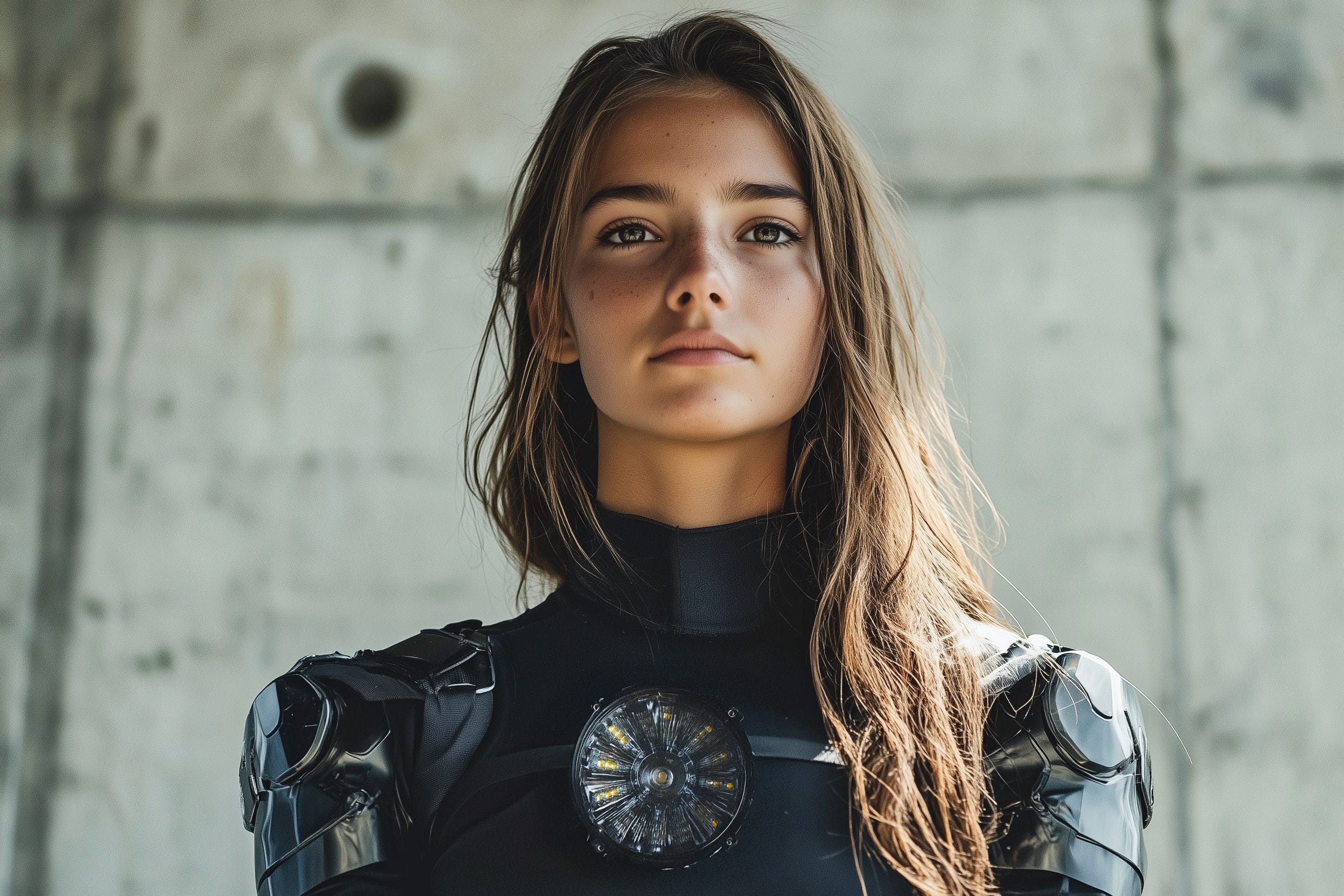
The sun slowly sinks into the calm, shimmering blue sea. A huge, glowing ball of fire disappears beyond the horizon. The last rays catch the young seagulls chasing each other and make them shimmer in a soft red hue. A gentle breeze blows across the sandy beach, tenderly caressing her legs. Mary opens her eyes and smiles.
The new dream simulation “Beach of Dreams” was a complete success. She stretches and stands up. The soft hum in the kitchen signals that her power juice is already being prepared and that she only needs to plug it in to be fully supplied with all the necessary nutrients. The shower is already on and preheated when she enters the cabin. The mirrors surrounding her align themselves with her, reflecting the flawless body of a beautiful woman. She looks forward to speaking Chinese soon. The chip, a gift from Jim, is already on the docking table. She just needs to place her finger on the sensor, and her abilities are expanded. Gone are the days when painful electrodes had to be attached to her head.
She steps out of her shower and wraps herself in a soft pink towel. Looking out the window, she watches the city wake up. The news, projected as holograms in front of her eyes, shows a few protests by unoptimized people, but they are quickly suppressed by quietly buzzing security drones. Mary shakes her head. There are still some who, although they can afford it financially, choose not to be optimized and prefer to mingle with the weak, ugly, and decaying crowd. She smiles and enjoys the warmth flowing into her flawless body with a single thought. In old documentaries, she has seen people doing strange contortions to stay fit and putting greasy stuff in their mouths to feed themselves. She shudders at the thought and revels in the power and energy flooding through her.
A wonderful new day awaits her, with a major upgrade to her abilities. The new data stream, “Visualization of Thoughts,” specially optimized for writers like her, will be available in her district transformer in a few hours. She has earned it. Because today is her 459th birthday.
Welcome to the wet dreams of the transhumanists.

Transhumanism – cult or science?
When Julian Huxley coined the term in 1957 and defined it as the aspiration of the human species to “surpass itself” and overcome its limitations through the “realization of new possibilities of and for its human nature,” he likely never imagined that his fantasies would someday develop into a cult-like phenomenon. The end of flawed evolution would allow us to take the development of human nature into our own hands and create a being so optimized in a post-human state that humans, this half-baked initial product, as Nick Bostrom describes it, become nothing more than a distant memory.
The goal is to use technology to deliberately advance humans until they reach a new, “better” stage of development. According to this view, humans actively continue and accelerate their own evolution, transforming the current human form into a post-human state. Transhumanism sees itself both as a scientifically optimistic philosophy and as a cultural movement. The era of “auto-evolution” has begun, in which responsibility for future development is no longer left to natural evolution but is now in our own hands.
When I was a young microbiology student at university, full of hope and belief in the invincibility of science, better known today as “The Science ™”, my professor, who taught immunology, tempered my enthusiasm with this statement: "Many people think they know how the immune system works. In fact, we know nothing at all." Yet, this principle applies not only to the immune system but, in a broader sense, to the entire human being, this walking miracle that has inhabited the planet for nearly three million years. We may understand metabolic pathways, learn how organs function, and identify bacteria in the microbiome, but ultimately, we cannot go beyond the surface. Doctors themselves understand this best, if their egos permit them to admit it.
The fact that we still attempt to intervene deeply in this ultimately incomprehensible system is driven by two factors: the dominance of materialistic thinking and our ego.

Blind materialism
We are still deeply rooted in the age of materialism. We only believe in what we can measure and consider ourselves the forefront of evolution. We superficially and politely appreciate philosophical ideas like Plato's metempsychosis, which speaks of rebirth and an intermediate stage after death, only to be thrown back into new worlds, but inwardly, we ridicule them and feel evolutionarily superior to Plato.
We only believe what we can measure, we only trust what our minds can explain.
Although we know our understanding is limited, we cannot accept that the world around us is just a subjective interpretation of the diverse wave and energy forms surrounding us constantly. Only measured values transform hypotheses into reality. In doing so, we limit ourselves and wrongly focus only on our own perception. The amazing thing is that we know we are limiting and reducing ourselves, yet we cling so tightly to our minds that we refuse to consider any other possibilities. Yet, it is precisely these other possibilities that could give us access to a new consciousness and mark the start of the next leap in evolution.
Greed and ego
But we are trapped in a tight web of greed and ego. Our efforts are not truly aimed at improvement but instead focus on generating profit or boosting our egos. This reflects the current dual system of industry and academia.
That is not reprehensible in itself. It only becomes harmful when we deceive ourselves into believing we want to improve the world, advance evolution, act purely for intrinsic reasons, and are free of other motives. This massive self-deception is even worse than openly and consciously accepting our weaknesses and trying to address them. Anyone who has spent years in academia understands that it’s a battlefield of egos. Likewise, anyone working in industry knows the limitations imposed by the need to make a profit. Those who conclude from this that non-profit organizations, or NGOs are the ultimate solution are trying to fight fire with fire.
We are caught in a tight web of our limited perception, our dominant intellect, and our instincts. Based on this, we attempt to advance humanity and give evolution a decisive push so humans can transition into a post-human state and achieve a fusion of technology and biology? This is like a hamster on its frequently-mentioned wheel, believing it is moving faster and faster without ever truly leaving its spot.
Science is not transhumanism
I don't mean that we should stop improving ourselves. Human evolution has been driven by a desire for knowledge, curiosity, and constant learning from mistakes. But we have reached a point where many believe we are invincible and capable of outsmarting creation in the broadest sense to develop a new form of existence.
At least, that is what transhumanists think, as they push for dehumanization and the end of our species based on the assumption that humans are free to determine their own destiny. That may be true, but never before in human history have so few people been able to influence not only their own future but also that of billions of others.
Transhumanists already accept their separation from the rest of humanity, who are unable to follow their superior thinking. They are aware that in their future, a small group of optimized individuals will exist who are infinitely superior to the rest of the unoptimized masses. The disturbing part is that this idea is not only accepted but even desired.

The errors of transhumanists
The fundamental flaw of transhumanists is that they cannot admit their own fallibility. Ray Kurzweil, the American inventor and futurist, popularized transhumanist ideas in public and claimed that by the 2030s, nanobots would routinely be in our bloodstreams, keeping us healthy and enhancing our mental abilities, allowing us to access a cloud directly with our brains, enabling us to send and receive emails and photos, as well as back up our thoughts and memories.
Anyone who has ever taken even a passing critical look at the early 2020s mass genetic engineering of humans using mRNA-based technologies (commonly referred to as mRNA vaccination) knows that we know nothing about the complex processes in our bodies that we can unintentionally trigger through reckless actions.
We act like children building a sandcastle on the beach, not thinking about the next wave, then get surprised and angry when the impressive structure simply collapses. This might sound overly simple, but even the 999th publication in Nature won't hide the fact that, while we excel at analyzing details and love to get lost in them, we are terrible at recognizing complex relationships, let alone predicting them.
Humans in the crosshairs of transhumanists
What makes transhumanists unique is that they will stop at nothing. They want to optimize the brain, muscles, metabolic processes, etc., just as they want to optimize the microbiome. Their dream is a detailed, synthetically produced, personalized microbiome that controls our health and well-being.
The dying microbiome
This is almost ridiculous when you consider that humanity and its “modern lifestyle” have managed to decrease the diversity of its microbiome by up to 50% in the last 100 years. We are systematically killing our microorganisms, causing modern diseases such as cancer, obesity, type 2 diabetes, neurodegenerative diseases, and more. In particular, the massive use of antibiotics, 70–80% of which are used in animal husbandry, has caused catastrophic damage to our microbiome, the full extent of which we are only now beginning to realize.
But there is no time left to laugh. Because transhumanism is the final step in this madness. And it is coming towards us with great strides.
The synthetic cell
The starting point for this massive acceleration was the minimal cell JCVI-syn1.0, artificially produced in 2010 by J. Craig and his team, which was reduced to version 3.0 in 2016, in which it had a 531 kb genome and contained only 473 genes. They transplanted a completely synthetic DNA into a living mycoplasma cell, proving that a cell can be kept alive with artificial genes alone. It is important to note that the recipient cell provided all other building blocks, i.e., the entire molecular machinery without which it would not function. Only the genome was synthetic. Even though this synthetic cell can be used for scientific research, it marks the beginning of “creating life.”
The idea is as old as Frankenstein's monster. Modern, independent, and enlightened humans would love to take the place of the Creator and finally find answers to the questions they cannot answer: What is the secret of life, the driving force behind it? Since they cannot accept explanations that cannot be measured, they are caught in a downward spiral of explanatory distress. The resulting cognitive dissonance is the driving force behind transhumanism: “I only accept what I can measure. I cannot explain the origin of life and consciousness with materialistic approaches. Nevertheless, I am.”
Therefore, it is vital for transhumanists to break away from the idea of an all-powerful creator and go beyond it. Not just to play God, but to become God.
Gene scissors
Gene scissors CRISPR-Cas9, a molecular genetic tool that allows genes to be easily manipulated, has opened the door to transhumanism even further. Of course, CRISPR-Cas9, which is originally a natural defense mechanism of bacteria against viruses, is a powerful and very useful tool in modern biotechnology. But it has also opened the door wider for transhumanists and their sick idea.
Because that's what it is: transhumanism is a mental illness.
In vivo snipping
In 2024, Eligo Bioscience achieved a world first: the company successfully modified the DNA of intestinal bacteria in vivo, meaning directly in animals. This breakthrough was made possible by using bacteriophages, specialized viruses that specifically attack certain types of bacteria. These bacteriophages attached themselves to their target bacteria and injected a DNA strand that encoded an editor. This editor could induce specific mutations in the bacteria. As a result, bacterial antibiotic genes could be precisely and directly eliminated within the animal.
This is a remarkable example of modern science's capabilities. The targeted removal of these genes in living animals was particularly groundbreaking. This method could also be used to specifically alter the human microbiome. The challenge lies in intervening in a living system whose complexity is unknown or at least difficult to comprehend. A single precise intervention can trigger chain reactions whose consequences might only become clear years later.
Manipulation of embryos
A particularly abhorrent form of scientific misconduct came to light in 2018 through the activities of Chinese researcher He Jiankui: he secretly manipulated embryos to make them resistant to HIV. The resulting designer babies became a real-life nightmare for the research community. He Jiankui was arrested and punished, but his most serious mistake was to make his research public.
Anyone who believes that this was the only case of genetic manipulation of embryos probably still believes that ethics committees are solely bound by their conscience. They will also never ask themselves why, in the early 2020s, millions of pregnant women and young children around the world were suddenly allowed to undergo genetic treatment, even though, especially after the experiences with the Contergan affair in the previous century, there was a strict rule that pregnant women should only be treated with medication in emergencies so as not to endanger unborn life.

A complex network in delicate balance
But back to microbiology: we believe that we can control microorganisms, master them, and manipulate them. But it is they who control us. They have the ability to divide multiple times within an hour, exchange genes, and influence us in almost every part of our body. With our approximately 23,000 genes, they supplement us with a non-redundant catalog of about 2–3 million bacterial genes in the gut metagenome so that we acquire essential metabolic and immune functions that enable us to survive.
Through artificial manipulation, we could trigger dysbiosis on a scale never seen before. Dysbiosis in our various microbiomes, bacterial vaginosis in women, and irritable bowel syndrome are already signs of an increasingly hostile world for our microorganisms.
We still know so little about our microbiome. In most cases, it is unclear whether the composition of a microbiome (because we have many micro-microbiomes in our body, not just one in the gut) is the result of a disease or its trigger. We cannot even quantify bacteria properly and are still using methods that are centuries old. The complex network and communication between microorganisms remains a huge question mark. Everyone understands that a layman cannot simply blindly change a setting on his car engine without having to reckon with the consequences. But transhumanists rise above this. They are not car mechanics, but designers, engineers, creators.
Whether we like it or not, humans are in close interaction with nature. Ecological balances are sensitive. For example, do we really want to release CO₂-consuming microorganisms into the world's oceans, even at the risk of CO₂ levels falling below 150 ppm and thus below the limit at which life is still possible? The world is a huge organism, and we are in the process of destroying our own livelihoods by deliberately disrupting its delicate balance.

Time to act
Transhumanism will, unquestionably, wipe out humanity if the idea is not stopped first. It is an expression of a persistent mental illness of humanity, a humanity that has been slaughtering and mutilating each other for hundreds of years. Madness has become the norm. However, it is important that the Starbucks coffee stays nice and warm in the cup while you boredly flip through the newspaper.
And that is precisely where the great hope of the transhumanists lies: in the indifference of people who are so preoccupied with their artificially created problems that they have lost sight of what is essential. People who allow themselves to be intimidated without much trouble and follow the charlatans like an army of blind people.
It is time to say STOP and put the transhumanists in their place. It is not about stopping progress in Western medicine and biotechnology. Even if symptom treatment in Western medicine is short-sighted, it can still alleviate suffering and pain.
It is about combating excesses such as transhumanism and not allowing everything that is possible. It is about waking up from our slumber, forming our own opinions, and not relying solely on “The Science ™” and the power-hungry people behind it.
It is about respecting and supporting the balances in our bodies and on our planet instead of trying to manipulate them.
We need to open our eyes and recognize how rampant global insanity is destroying our world and our lives. We can still act.
Transhumanism may be just an extreme form of global insanity, but it represents the wild, uncontrolled aggression of a few who presume to have power over the lives of all.
We cannot and will not allow this to happen.
The Mary of the transhumanist dystopia has no place in this world.

Further reading:
Brödel AK et al. (2024) In Situ Targeted Base Editing of Bacteria in the Mouse Gut. Nature 632: 877-884.
Cyranoski D. (2018) CRISPR-Baby Scientist Fails to Satisfy Critics. Nature (News article).
Gibson DG et al. (2010) Creation of a Bacterial Cell Controlled by a Chemically Synthesized Genome. Science 329(5987): 52-56.
Hutchison CA III et al. (2016) Design and Synthesis of a Minimal Bacterial Genome. Science 351(6280): aad6253.
Jinek M et al. (2012) A Programmable Dual-RNA-Guided DNA Endonuclease in Adaptive Bacterial Immunity. Science 337(6096): 816-821.
Sonnenburg ED et al. (2016) Diet-Induced Extinctions in the Gut Microbiota Compound over Generations. Nature 529(7585): 212-215.
World Organisation for Animal Health (WOAH) (2024) Eighth Annual Report on Antimicrobial Agents Intended for Use in Animals (PDF).